
The PnR report from the previous article already includes a quick DRC section — but there's a separate, dedicated DRC panel that goes further, and it's a PRO feature.
4 min read | Beginner Level
What You'll Learn
- What design rule checking (DRC) verifies, and why it comes after PnR
- How DRC differs from lint, despite the similar-sounding names
- What a DRC report contains
What DRC Checks and Why It's PRO
Design rule checking verifies that a physical layout obeys the foundry's manufacturing rules — minimum spacing between wires, minimum widths, via placement, and similar geometric constraints. The dedicated DRC panel runs a full KLayout-based check against the process rule deck and is PRO-only.
DRC (KLayout-based) requires the PRO tier.
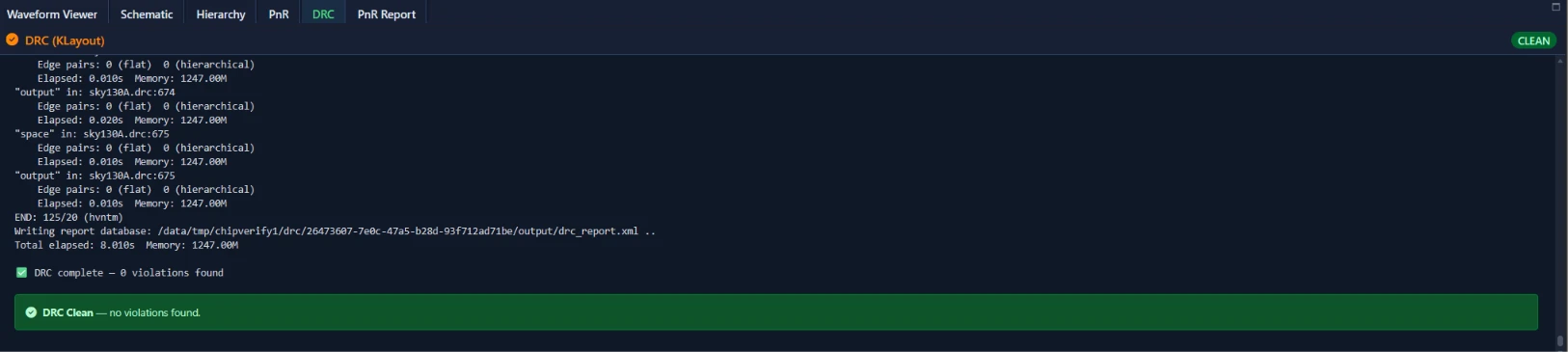
Where DRC Fits After PnR
DRC runs against the physical layout PnR produces, not against your RTL — it's a downstream check on geometry, not logic. That's also why it comes after PnR in this series rather than earlier.
Reading a DRC Report
A DRC report starts with a summary — either "DRC Clean" or a violation count — followed by a table listing each rule that was checked, a message describing the violation, and how many times it occurred. A clean report doesn't mean the design is correct functionally, only that its layout obeys the foundry's geometric rules.
Common Mistakes
Mistake #1: Confusing DRC with lint
Lint (Chapter 3) checks your RTL's code quality before synthesis. DRC checks a physical layout's geometry after place-and-route. They check completely different things at completely different stages — the similar-sounding names are the only thing they share.
Where Is This Used?
DRC is a mandatory foundry sign-off gate — no design tapes out without a clean DRC report, since a rule violation can mean the manufactured chip simply doesn't work as laid out.
Summary
In this tutorial, you learned:
- What DRC checks, and that it's a PRO-only feature
- Why DRC runs after PnR, against physical layout rather than RTL
- How to read a DRC report's summary and violation table
- How DRC differs from lint despite the similar name
